Geolocation in Dating Apps: Privacy and UX

Manish Kumawat
Last Updated on: 12 August 2026



Have you noticed that dating apps ask for location access while installing? Today, geolocation in dating apps is a relevant feature that most modern dating app users demand, and most dating brands want to add to their dating apps. From getting location-based matches to emergency assistance, the benefits of adding geolocation in dating apps are countless.
Especially from the dating app business and entrepreneur point of view, the geolocation feature has brought many changes in dating apps in the last few years. No doubt, in the coming years we are going to experience more influence of geolocation features in dating apps. That's why most of the dating app businesses upgrade their dating apps with geolocation features.
At the same time, there are many concerns about how geolocation in dating apps is linked with user experience and how it ensures privacy. Both dating app businesses that want to implement geolocation features and dating app users need to know all the aspects of how geolocation works and brings benefits.
Here we will discuss the role of geolocation in dating apps. This guide will be useful for both users and those who want to invest in dating app development. Here we will explore:
Table of Contents
9 sectionsGeolocation Means?
Have you ever thought about why mobile apps are asking for location permission? There are several opinions, concerns, and conceptions among people about why apps are asking for location permission. Many say apps are stealing your data; some say apps want to know your movement. Even some of us refuse to allow geolocation permission as we are concerned about safety and privacy.
Whatever the concepts, the reason behind apps asking for your geolocation varies as per the category of the app. For example, if a food delivery app is asking for your geolocation, it is to deliver your food to your doorstep. But why do dating apps need geolocation?
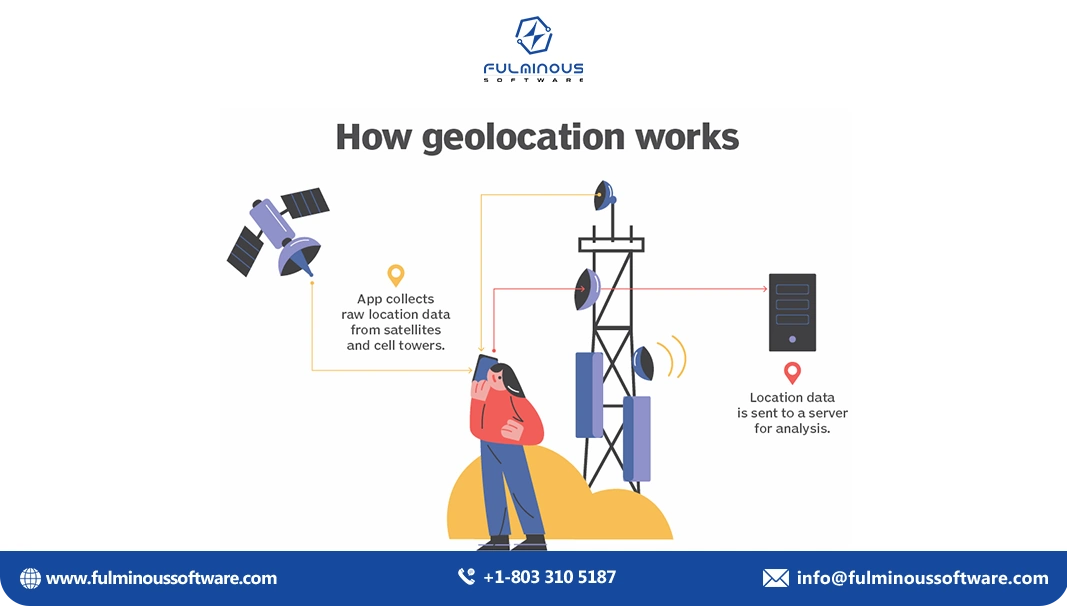
In simple words, geolocation in dating apps is all about the physical location of the dating app user, or where the user accesses the app. Some of the technologies that can be used for this are:
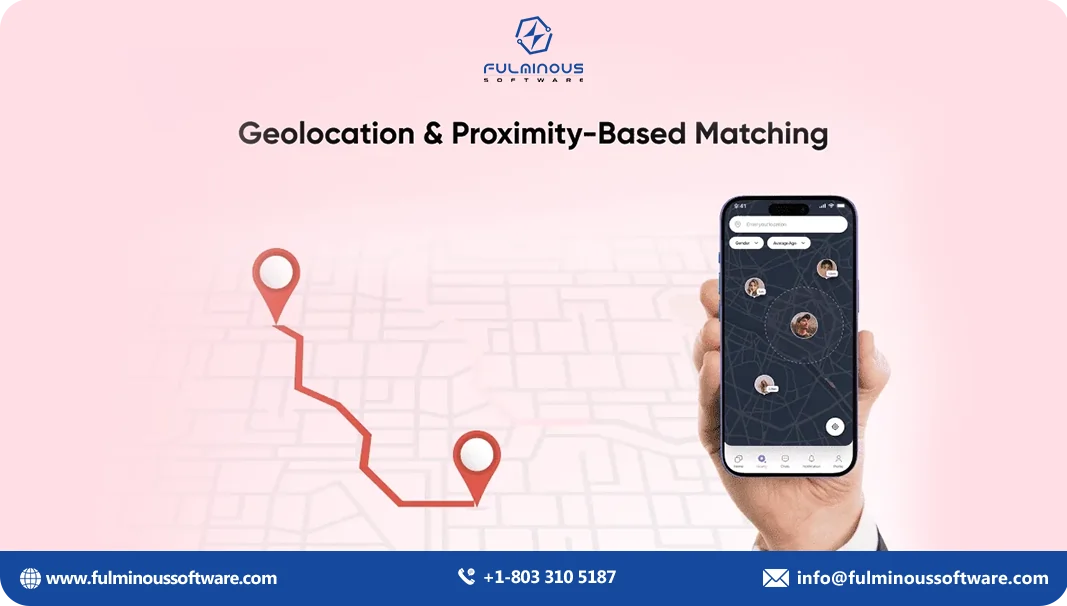
For example, geolocation-based dating apps have advanced features to find a nearby partner when you visit a shopping mall, restaurant, or garden. That means a faster and more effective way to find partners in each location and start dating quickly.
The Role of Geolocation in Dating Apps
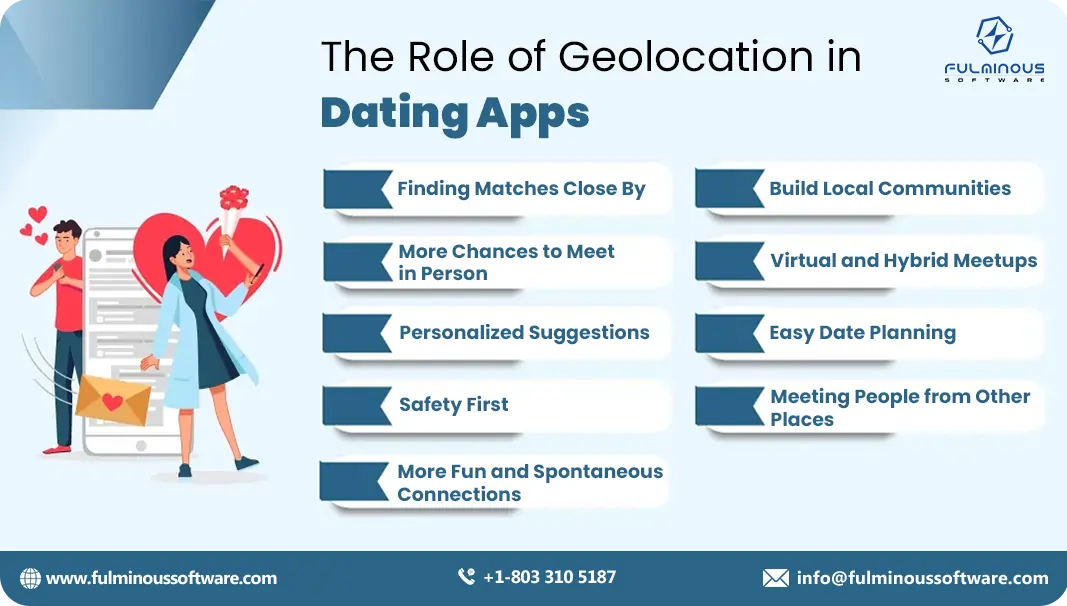
Do you know the global location-based dating app market is about to reach $13.34 billion by 2033? When we look deeply into how geolocation features benefit a better dating experience, it has a direct impact on several use cases of online dating apps. In multiple aspects, these geolocation features help provide a more relevant and convenient dating experience, especially with local connections. Now we can see these features in detail:
1Finding Matches
What if dating apps send notifications to users about the best matches in the area where they are looking for? Yes, dating apps check the current location of users and suggest profiles of users within a particular distance.
2Filter Matches
What if dating apps get quick matches and eliminate long searches by adding location-based filters? Yes, now dating app users use location filters and eliminate boring long searches for matches.
3Revenue Generation
Do you know the revenue generation benefits of geolocation in dating apps? Yes, geolocation dating apps can make huge revenue with local ads or suggest local events, bringing plenty of local sponsors.
4Fast Meetup
What if users get unplanned dating experiences? When dating app users go to some places or events, dating apps tell them when someone is close by, so it helps for unplanned meetups.
5Personalization
Just imagine the satisfaction level of dating app users when they get exactly what they look for. Dating apps suggest matches and dating-related events in the user's area, considering all user demands.
6100% Safety
Imagine the dating app user needs emergency support, and the dating app gives fast assistance. Yes, if a dating app user needs emergency assistance or quick action from authorities, dating apps use geolocation and send it to authorities or friends.
7Meeting Global People
Do you know the role of geolocation features in opening a global user base for your dating brand? Geolocation dating apps help users find people from any part of the world. This is helpful if you travel a lot or connect with someone before visiting a new place.
8Local Communities
Have you thought about dating communities in each location that expand the user base of your brand? Dating apps use location features to help grow the local community of people who use your dating app.
9Easy Dating
What if dating apps make real dating scenarios amazing and hindrance-free with location features? Yes, geolocation helps you find places to meet up, like restaurants or parks. Geolocation dating apps even give you directions to the locations you choose for dating.
In short, geolocation in dating apps makes the whole dating experience more engaging and 100% safe. In the coming years, we will see more amazing impacts of these geolocation-related features in dating apps. That means geolocation features are now a must-have feature for dating apps.
How Geolocation Affects the User Experience (UX) in Dating Apps
Among the 470 million+ global dating app users, most of the users prefer geolocation-based dating apps. User experience (UX) is the major thing that decides the enjoyment of your users. When a dating app offers the best UX, your users will stay longer, and also new users will be attracted to your app. Geolocation has a direct influence on the UX of your dating apps.
1Finding Matches Faster
Today, people choose dating apps with fast search features and quick matches. Finding matches will be easier and faster with geolocation features. Users can set the dating app feature to show people who are nearby, so you don't have to scroll through profiles of people who are too far away.
The app updates automatically to show fresh matches based on where you are right now. When a dating app uses geolocation to provide nearby matches and eliminates long search processes, it will help improve overall user satisfaction and experience.
2Meeting People Anywhere
Geolocation access in dating apps is actually breaking the limitations of user locations and regions. For example, if a user is traveling to a new place, geolocation lets them find people near them there. Also, some users prefer to connect with people from particular regions or faraway places.
So, dating apps help users to meet new people from any region, even if the user is not at home. It makes dating more amazing with global users. When users can talk to people no matter where they are and get global access, the overall user experience will be at its peak.
3Feeling Safe and Trusting Others
Geolocation features are also a foundation for dating app safety features. Knowing that matches are nearby helps users feel comfortable when meeting new people. Dating apps can also provide features like "Travel Mode" or set the location range they want to meet someone.
All these lead to feeling more secure. Some apps also use geolocation to cross-check whether people are telling the truth about where they live or where they are. Geolocation also connects with government agencies in cases of emergency situations, which helps in quick action.
Privacy Concerns and Problems with Geolocation in Dating Apps
Privacy concerns and problems are a major hurdle while adding geolocation features to dating apps. When a dating app asks for location access, users may have many concerns about why the app is asking for location, how the app uses their location details, whether the app monitors their movement, whether the app shares details with companies, and so on.
Today, even many dating app users don't give location access. Dating app development experts need to consider these issues and make fair use of location information in dating apps. Here are some important privacy problems:
1Tracking Users All the Time
What if a user feels like someone watches wherever they go? Privacy is one of the basic requirements in dating experiences, and sometimes geolocation raises concerns about it. Geolocation in dating apps means locating or following wherever the user is going all the time, even when you're not using the app.
Even though geolocation features help in finding location-based matches, it can also feel like someone is always watching. This is one of the major concerns of many dating app users. Many users are not even aware of the features to manage or restrict location access in dating apps.
2Risk of Data Leaks, Stalking or Harassment
Dating app users usually share concerns about who can access their location details, or if there are any third-party companies that use their location details. The risk of sharing live location 24/7 is a major security concern. There are also concerns about hacking or misuse of dating app location details.
If an app shows exactly where you are, hackers or cyber criminals might use that information to find you or use it for scams. Such security concerns are dangerous if people share where they live or where they often visit. Also, uncontrolled access to geolocation of dating app users raises a major concern.
3Unfair Use
You know the value of each user's data, especially the geolocation. There are cases when dating app businesses don't follow the industry standards and use the location details of users for their profit. Selling geolocation information to third-party agencies and marketing companies is a major concern.
Fair use of dating app data is the responsibility of each business. If a dating app business follows all the regulations in the sector, it will make fair use of geolocation, with the consent of the dating app users. This also helps users to trust your dating app brand.
4Not Telling Users / Less Awareness
Many people don't know exactly how to manage geolocation features in dating apps, or how to use or control the location sharing features. It's the duty of dating app brands to make users aware of fair use of geolocation and how to control the location features.
As users are always concerned about all these problems, it's the duty of dating app businesses to ensure the best safety and security for their dating app users. Leading dating app development companies and top-notch dating app developers have several unique strategies and ways to overcome these security concerns with the latest technologies.
Best Ways to Protect Privacy in Dating Apps
As there are many concerns and issues related to fair use of location in dating apps, these concerns of dating app users are worth addressing. Without earning the trust of users, the success of a dating app is at risk. That's why it's the responsibility of the dating app business to keep user location information safe.
When you develop a dating app with geolocation features, you can consider the following proven best practices:
Clear Privacy Rules
There are several privacy rules and industry standards to make fair use of user location, but only with the consent of users. Dating app developers need to meet all of those privacy rules. When designing the geolocation-related features, dating app development experts need to explain clearly how they use your location.
There must be transparency and a disclaimer about what geolocation-related information is collected by dating apps and why. If a dating app clearly follows all the rules related to fair use of user location and privacy, it helps users trust the app 100% and decide if they want to share their location.
Let Users Control Location Sharing
The ultimate control to share or hide geolocation details must be in the hands of dating app users. Yes, dating apps must allow users to control location details. Also, it's important to add the option to say "no" to geolocation access and also to hide location at any time.
Users need features to choose if they want to share their live location and set a distance for matches. Overall, users must control their geolocation-related privacy. If a dating app user has freedom to control location features, the users will be 100% comfortable.
Hide Exact Locations
Another way to add geolocation in dating apps with minimum risks is to hide the exact location. If the app accesses and shares the exact location coordinates of a user, there are many security risks. Even if it accesses the exact coordinates, dating apps can show a general location (without coordinates) to those who access location details.
Without sharing the exact location, dating apps can show a neighborhood, landmarks, or city. This protects the privacy of dating app users and reduces the risk of bad people finding users with location access. But at the same time, the app developers need to add features for exact location in emergency assistance features.
Protect User Data with Encryption
There are several ways to protect the location details that a dating app collects. Encryption is one of the best ways to protect user location data in dating apps. There are also AI-based security features that keep geolocation features safe.
Dating app developers need to add strong data protection features. That means even if the app's system is hacked, the location information of users stays safe. Also, the app should keep your location for as long as they need it and delete it when it's no longer needed.
Turn Off Location Tracking When You Want
There are cases when dating app users look to completely hide the location details. Yes, it's always a choice for dating app users. Sometimes users need to turn off location permanently. All these possibilities need to be addressed.
So, when you develop a dating app with geolocation features, dating app developers can add features to turn off location or limit access. For example, a "stealth mode" can hide your location temporarily while still using the app.
Ask for Permission Regularly
Not only during the initial installation, but dating apps must also have a feature to ask for location access permission periodically. Dating apps should ask for your permission whenever you use your location. But this permission popup must not be an interruption for a smooth dating experience.
This reminds users of what information is being collected, and they can change their settings if they're not comfortable with it. These simple steps help keep location safe and make sure users are in control of their own privacy.
Balancing User Experience and Privacy
When you develop dating apps with geolocation features, it's relevant to manage geolocation features for better user experience and maximum privacy. That means while the geolocation gives amazing dating experiences like fast matching and location-wise matching, the location data should be under controlled access.
Yes, it's a fact that geolocation is beneficial to match people by location, but it's important that the location data does not lead to misuse. Yes, user safety is equally important as the dating experience. Following good privacy rules, dating app developers can make sure you feel safe and happy while enjoying the benefits of geolocation features. Now see the best strategies to keep the balance:
Moreover, you need guidance and the services of top dating app development experts to make the best use of geolocation features. They can help you create custom strategies that balance user experience and privacy while adding geolocation features. Then, how to find the best tech partner for geolocation dating app development? See the next section!

How to Implement Geolocation in Dating Apps?
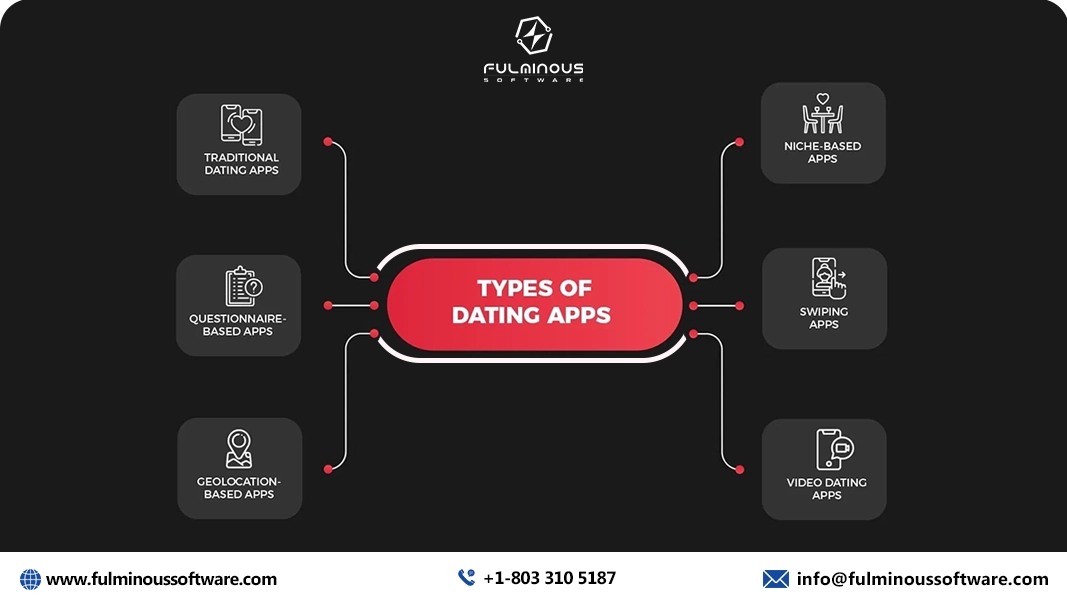
Seeing all the benefits of geolocation in dating apps, businesses may want to develop a new geolocation-based dating app or want to add geolocation features to current dating apps. But it's not a simple process to add geolocation in dating apps.
Have you noticed the technical tasks in adding geolocation features? Also, there are many privacy rules and best practices that need to be followed in this implementation process. Even the type of dating app and target audience types will influence the geolocation features to be added.
The assistance of a top dating app development company can make this task easy. Top dating app experts have the best strategies and custom plans to add various geolocation features to your dating apps. Now meet the best tech partner for geolocation dating app development.
Advanced Geolocation Features in Dating Apps from Fulminous Software
If you want to develop a new geolocation-based dating app or improve current dating apps with geolocation features, Fulminous Software is the best choice. With a team of 10+ top dating app development experts, Fulminous Software knows how to customise and add geolocation features to each dating app.
Fulminous Software has already delivered more than 5 dating app geolocation-related projects in recent times. This real project experience helps our top dating app developers to follow all user experience and privacy demands. Fulminous Software can make your dating app advanced with geolocation features:
Fulminous Software can customise these geolocation features according to the dating app business plan of each client. Our experts are well-skilled to add these features without interrupting the user experience and bring maximum benefits for both users and businesses. You also get top-quality AI-based security features for fair use of geolocation features.
Now concerned about the cost to add geolocation features in dating apps or looking for affordable services to develop geolocation dating apps? The cost to develop location-based dating apps starts at $5,000, and you can even hire dating app development experts at just $10-$30 per hour.
As you have a perfect dating app development partner for implementing geolocation features in dating apps, no more waiting. Now explore more about our dating app development services and specialisation in AI-based dating app development.
If you want to build a new geolocation-based dating app or add geolocation features to your current dating app, Fulminous Software can help. Contact us now!
Get a Free Quote Explore Our ServicesGet the Best Geolocation Dating Apps Today!
Geolocation or location tracking is always a confusing feature in dating apps. But we have seen that there are several benefits and concerns about this feature. Those who are aware of both sides will choose their dating apps wisely. If you are developing your own dating app or already have a dating app, you need to create strong trust in your users concerning this geolocation feature.
Following the proper steps to ensure the privacy of users and balance UX and privacy is the key to proper usage of this geolocation feature. Even though it's a heavy task to make your users believe how your app uses their location details, you need to succeed if you want to be on the front line of the dating app industry.
As a top dating app development company, Fulminous Software is all set to develop feature-rich dating apps with all the benefits of geolocation features. If you want to build a new geolocation-based dating app or add geolocation features to your current dating app, you can contact us now.
FAQs
Q1. What is geolocation in dating apps?
Geolocation in dating apps is all about finding and using the location of users for benefits for both users and businesses.
Q2. How to develop a geolocation-based dating app?
You can connect to top dating app development services like Fulminous Software to outsource the geolocation dating app development projects or hire dating app developers.
Q3. What is the cost to develop a Geolocation dating app?
The cost to develop a geolocation dating app can be $5,000 to $50,000+.
Q4. Why add geolocation features in dating apps?
Geolocation features in dating apps bring plenty of benefits for both users and dating businesses to get location-based matches, plan dating events, and get emergency assistance.
Q5. How does geolocation help in improving experience on dating apps?
Geolocation matchmaking apps eliminate long search processes and bring a list of nearby matches quickly.
Q6. Why is privacy important in implementing geolocation?
As dating apps manage the live location of users, it's important to keep the location information 100% safe and use it only for fair purposes.
Q7. How does geolocation help in revenue generation?
Dating apps can promote local ads or suggest events based on the location and bring more revenue.
Q8. How to add geolocation features to existing dating apps?
You can add geolocation features to current dating apps with the assistance of top dating app development services.
Q9. How to hire someone to develop Geolocation dating apps?
You can hire geolocation dating mobile app developers from Fulminous Software within a day at $10-30 per hour.
Q10. How much time is needed to develop geolocation dating apps?
A top dating app development company can develop custom Geolocation dating apps within 6-30 weeks.
Q11. How does geolocation make dating apps 100% safer?
When a dating app user needs emergency assistance, dating apps use geolocation and send it to authorities for quick support.
 Verified
Expert in Software & Web App Engineering
Verified
Expert in Software & Web App Engineering
I am Manish Kumawat, co-founder of Fulminous Software, a top leading customized software design and development company with a global presence in the USA, Australia, UK, and Europe. Over the last 10+ years, I am designing and developing web applications, e-commerce online stores, and software solutions custom tailored according to business industries needs. Being an experienced entrepreneur and research professional my main vision is to enlighten business owners, and worldwide audiences to provide in-depth IT sector knowledge with latest IT trends to grow businesses online.


Partner with Top-Notch Web Application Development Company!
Discuss your Custom Application Requirements on info@fulminoussoftware.com or call us on +91-935 141 8445.
15 Days Risk-Free Trial